How to Avoid Common House Dust Mites & Protect Your Health

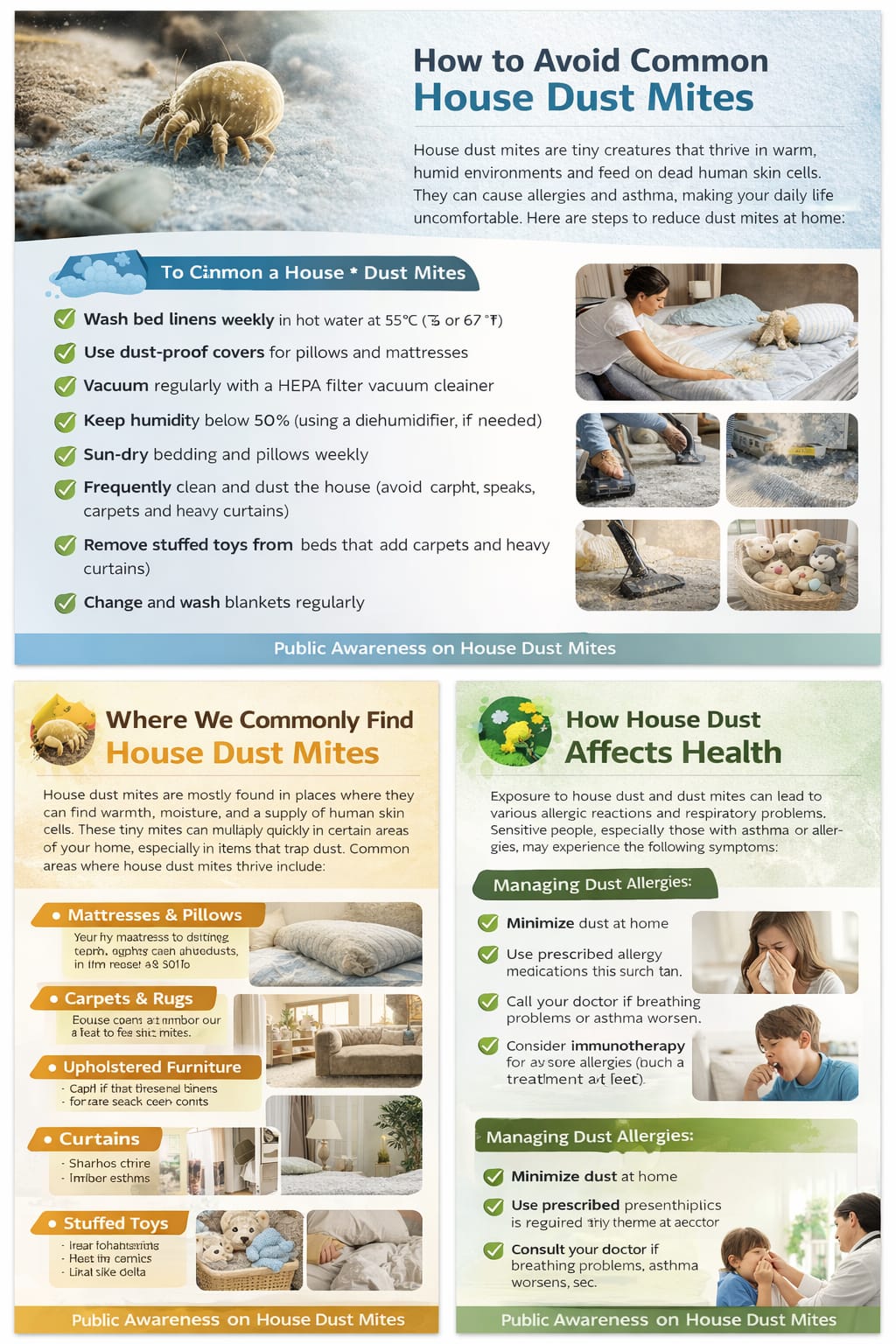
Dust might seem harmless, but hidden within it are tiny organisms called house dust mites that can seriously affect your health. These microscopic creatures thrive in warm, humid environments and feed on dead skin cells. While invisible to the naked eye, their impact can be very real—triggering allergies, asthma, and respiratory discomfort.
In this blog, we’ll explore where dust mites live, how they affect your health, and most importantly, how you can eliminate them from your home.
🦠 What Are House Dust Mites?
House dust mites are microscopic pests that live in household dust. They flourish in places where there is warmth, moisture, and a steady supply of human skin flakes.
Although they don’t bite, their waste particles and body fragments can cause allergic reactions, making everyday living uncomfortable for many people.
📍 Where Are Dust Mites Commonly Found?
Dust mites tend to gather in areas that trap dust and moisture. Some of the most common places include:
- Mattresses & Pillows – The perfect breeding ground due to warmth and skin cells
- Carpets & Rugs – Trap dust and provide a humid environment
- Upholstered Furniture – Sofas and cushions collect dust over time
- Curtains & Drapes – Often overlooked but collect airborne dust
- Stuffed Toys – Especially in children’s rooms
⚠️ How Dust Mites Affect Your Health
Exposure to dust mites can lead to several health issues, especially for sensitive individuals. Common symptoms include:
- Sneezing and runny nose
- Itchy or watery eyes
- Coughing and wheezing
- Breathing difficulties
- Asthma flare-ups
If left unmanaged, these symptoms can significantly impact your quality of life.
🧹 Effective Ways to Get Rid of Dust Mites
Keeping your home clean and controlling humidity are key to reducing dust mites. Here are some proven tips:
🛏️ 1. Wash Bedding Regularly
Wash bed sheets, pillowcases, and blankets weekly in hot water (at least 55°C) to kill mites.
🛡️ 2. Use Dust-Proof Covers
Protect your mattresses and pillows with allergen-proof covers to prevent mite buildup.
🧼 3. Vacuum Frequently
Use a vacuum cleaner with a HEPA filter to remove fine dust particles effectively.
🌡️ 4. Control Humidity
Keep indoor humidity below 50% using a dehumidifier if necessary.
☀️ 5. Sun-Dry Bedding
Expose mattresses, pillows, and blankets to sunlight regularly—it naturally kills mites.
🧽 6. Reduce Dust-Trapping Items
Minimize the use of carpets, heavy curtains, and unnecessary upholstery.
🧸 7. Limit Stuffed Toys
Avoid keeping soft toys on beds or wash them frequently.
🔄 8. Clean and Replace Items
Regularly clean your home and change blankets and covers to maintain hygiene.
💊 Managing Dust Allergies
If you or your family members are already experiencing symptoms, consider these steps:
- Minimize dust exposure at home
- Use prescribed allergy medications or antihistamines
- Consult a doctor if symptoms worsen
- Consider immunotherapy for severe allergies
🏁 Final Thoughts
House dust mites may be tiny, but their impact on your health can be significant. The good news is that with simple cleaning habits and preventive measures, you can keep your home safe and comfortable.
A cleaner home isn’t just about appearance—it’s about creating a healthier living environment for you and your loved ones.
Share This Article

Written by : admin
Follow Us
Latest Articles
April 17, 2026
